
Under Construction
LIST OF DEVELOPERS
NEWS
COMESA, AfDB Launch USD1.5m Information Management Systems on Energy
CategoryPress Releases
TagsEnergy Access, Regulatory and Governance, Statistics
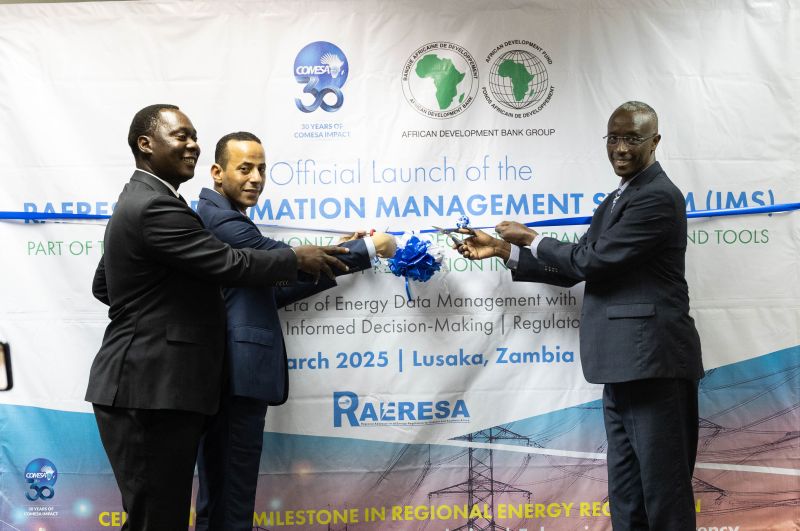
The African Development Bank and COMESA, have launched a USD 1.5 million Information Management System (IMS) to streamline data collection, analysis, and reporting for electricity regulators and utilities across member states. This online platform will enable efficient data submission and access, supporting annual and biannual reporting. This initiative, covering 12 COMESA countries and South Sudan, aims to standardize monitoring and evaluation, driving best practices in the energy sector. Other COMESA nations are supported through a parallel initiative by RERA-SADC.
The new Information Management System spearheaded by COMESA through the Regional Association of Energy Regulators in Eastern and Southern Africa (RAERESA) under the Project on Regional Harmonization of Regulatory Frameworks and Tools for Improved Electricity Regulation in the region shall see tangible progress in energy access, economic development,poverty reduction, and wealth creation.
Secretary General Chileshe Mpundu Kapwepwe represented by Assistant Secretary General in Charge of programmes Ambassador Dr.Mohamed Kadah with Mr. Callixte KAMBANDA, Manager, Energy Policy, Regulatory and Statistics Division of the African Development Bank and the Bank’s Team, and Eng. Elijah C. Sichone, Director General, Energy Regulation Board (ERB) of Zambia launched the IMS at the Secretariat on 21 March 2025.Ambassador Dr. Kadah stated that the RAERESA IMS will not only enable regulators and utilities in our participating Member States to monitor progress against established key performance indicators, but will also create a platform for transparent and consistent reporting across the region.“In effect, this is a game-changer, promoting regional harmonization and accountability, enhancing datadriven decision-making, and ultimately fostering an environment conducive to regional energy trade, integration, and investment,” Ambassador Dr Kadah said.
He added that the development of the Information Management System (IMS) is a major milestone under the project on Regional Harmonization of Regulatory Frameworks and Tools for Improved Electricity Regulation.“It embodies our commitment to creating a transparent, data-driven, and harmonized regulatory environment that supports investment and drives economic growth,” he added. Eng Sichone who is also Chairperson of the Portfolio Committee on Capacity Building, Information Exchange, Energy Statistics & Database of RAERESA, thanked COMESA for spearheading the development of the IMS.
He said that the Information Management System (IMS) will facilitate standardized data collection, analysis, and reporting across 13 participating Member States. It will empower regulators and utilities with a robust platform to monitor performance against key indicators, promote transparency, and enhance data-driven decision-making.“Ultimately, this will contribute to a more resilient and integrated regional electricity market,” Eng. Sichone said.
The African Development Bank provided the USD1.5M technical assistance to COMESA for the development of tools and frameworks to harmonizing regulatory policies across the region.Division Manager for Energy Policy, Regulation and Statistics at the AfDB, Callixte Kambanda stated that an integrated power market will play a crucial role in shaping Africa’s energy transition.“It is truly refreshing to celebrate this milestone and re-affirm our shared commitment to fostering an enabling environment for investment, strengthening investor confidence in Africa’s electricity markets, unlocking the continent’s vast energy potential, and accelerating universal energy access,” Mr Kambanda stated.
He added that Furthermore, the launch coincides with the ambitious objectives of Mission 300, a bold initiative jointly launched by the African Development Bank and the World Bank Group. The Mission 300 aims to provide 300 million first-time electricity connections across the continent by 2030. Twelve pilot countries have already committed to National Energy Compacts, which include time-bound targets for expanding energy access, mobilizing private sector investments, adopting new policies and regulations, and reforming electricity markets.
With the initiative directly targeting nearly half of Africa’s population currently without electricity access, as well as 87 percent of the world’s unelectrified population, Mr Kambanda said that a strong regulatory environment, regional integration, and cross-border electricity trade are critical to achieving the objectives of Mission 300.The launch marks a significant milestone in our journey towards enhancing electricity regulation and improving energy access across the COMESA region.