
Under Construction
LIST OF DEVELOPERS
NEWS
DR Congo: Solar and hydroelectric power investment planned for Kisangani
CategoryPress Releases
CountryCongo Democratic Republic
TagsElectricity utilities, Energy Access, Finance and Investment, Renewable Energy
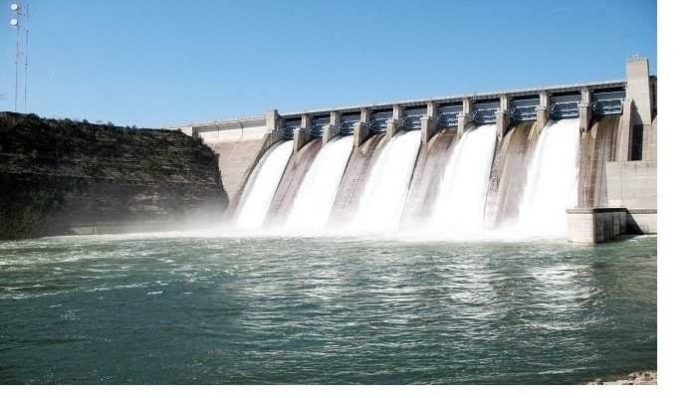
As the post-Kabila Democratic Republic of Congo (DRC) slowly opens up to investment, a new cast of characters is emerging with the promise of helping to make up the country’s dramatic infrastructure shortfalls.
Several players who have emerged with significant projects well beyond Kinshasa – such as the Moyi Power consortium’s project to serve three isolated cities in northern DRC (AE 440/10) – have established track records and development finance institution backing. Other figures are less familiar, including one group involved in a project at DRC’s largest inland port Kisangani.
Authorities in the city and Tshopo province believe that, within a few years, chronic electricity shortages can be overcome and greater access provided. Demand in the area is around 40MW – a low figure but which far exceeds the 12MW Tshopo hydroelectric power (HEP) plant’s capacity. It is presumed there is much greater latent demand that must also be met if the regional economy is to grow.
In Kinshasa’s ritzy Fleuve Congo Hotel, Ouagadougou-based Société Pongo Investment representative Nazaire Bossouli Mensah and Tshopo province interim government head Maurice Abibu Sakapela Bin Mungamba signed a contract on 7 June for the construction of two power plants in the Kisangani area.
The deal includes a 40MW solar PV plant at Mapiopio, 6km from the centre of Kisangani on the road to Banbgboka airport. It also includes a 80MW hydroelectric power (HEP) plant at Babeba, on the Tshopo river, near the town of Bafwasende, 260km north-east of Kisangani.
In an email to African Energy, Pongo Investment’s chief executive Abraham Koutiangba wrote that hopefully the first stone of the project will be laid on 3 July. If his forecast is correct, work should start in November and commissioning of the PV plant should take place by May 2024.
After the ceremony, Bossouli Mensah announced the project had reached financial close, without giving further details.
Interim governor Abibu Sakapela declared on 8 June that Pongo Investment’s engineers would start feasibility studies at the end of the month. Mensah told the press that work on both plants would start within six months.
Pongo Investment is primarily known in Ouagadougou as a financial services and insurance specialist. But the group has other skills: Koutiangba is director-general of Ouagadougou-based GIS International, whose GIS Niger subsidiary employs construction engineers and provides coaching services for companies in West Africa.
For the DRC project, African Energy was told a group subsidiary, Pongo Energy, had established a partnership with two Turkish companies to implement the scheme, which would be built under a build-operate-transfer basis.
Koutiangba said one company was Istanbul-headquartered UOK Enerji, which is involved in energy projects in West Africa and Turkey; it has an office in Berlin and a cable production factory.
The other Turkish partner, CW Enerji, is a solar panel manufacturer based in Antalya (it says it has installed a total 1.3GW capacity and has a distribution agreement to sell solar inverters of ABB in Turkey).
Neither company had confirmed its participation in the DRC project as African Energy went to press.
At the time of publication. Pongo Investment had not answered questions from African Energy on the cost of project and its financing.