
From Reform to Results: ERI 2024 Shows Real Regulatory Progress Powering Mission 300
Momentum is building across Africa’s electricity regulatory landscape. The African Development Bank’s Electricity Regulatory Index (ERI 2024) reveals strong, measurable progress in governance, transparency, and performance—showing that reform is beginning to deliver real results. For Mission 300, the Bank’s flagship initiative to provide electricity access to 300 million Africans by 2030, these advances represent the regulatory backbone of sustainable, affordable, and inclusive energy systems.
Launched in 2018, the ERI benchmarks how well African countries’ regulatory frameworks align with international best practice—covering legal foundations, tariff methodologies, service quality, consumer protection, and transparency. It now spans 44 countries, offering governments and investors a comparable, data-driven lens on what works and what to improve.
The 2024 edition shows clear gains: the average score rose to 0.668, up from 0.495 in 2022—evidence that countries are moving from paper reforms to practical implementation. Regulators and utilities are using ERI findings to tighten tariff setting, publish decisions, track performance, and unlock clearer pathways for private investment.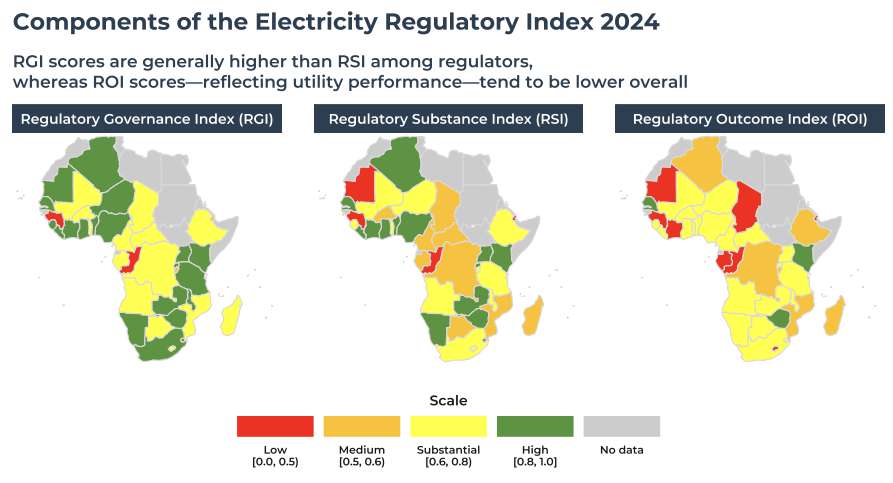
Proof of Momentum: Kenya, Senegal, and Liberia
In Kenya, the Energy and Petroleum Regulatory Authority (EPRA) has refined its tariff methodology, introduced multi-year control periods, and strengthened stakeholder consultation—cutting uncertainty and supporting financial sustainability.
Senegal, the top performer with an ERI 2024 score of 0.892, has modernized quality-of-service codes, aligned regulation with renewable and access targets, and maintained a strong, transparent governance model.
In Liberia, one of the most improved countries (up from 0.628 to 0.800), the regulator has issued new consumer protection rules, launched a renewable energy plan, and rolled out service-quality codes that raise standards and transparency.
Together, these examples demonstrate that the ERI is not just a benchmark—it is a catalyst for credible, country-led reform that builds investor confidence and strengthens service delivery.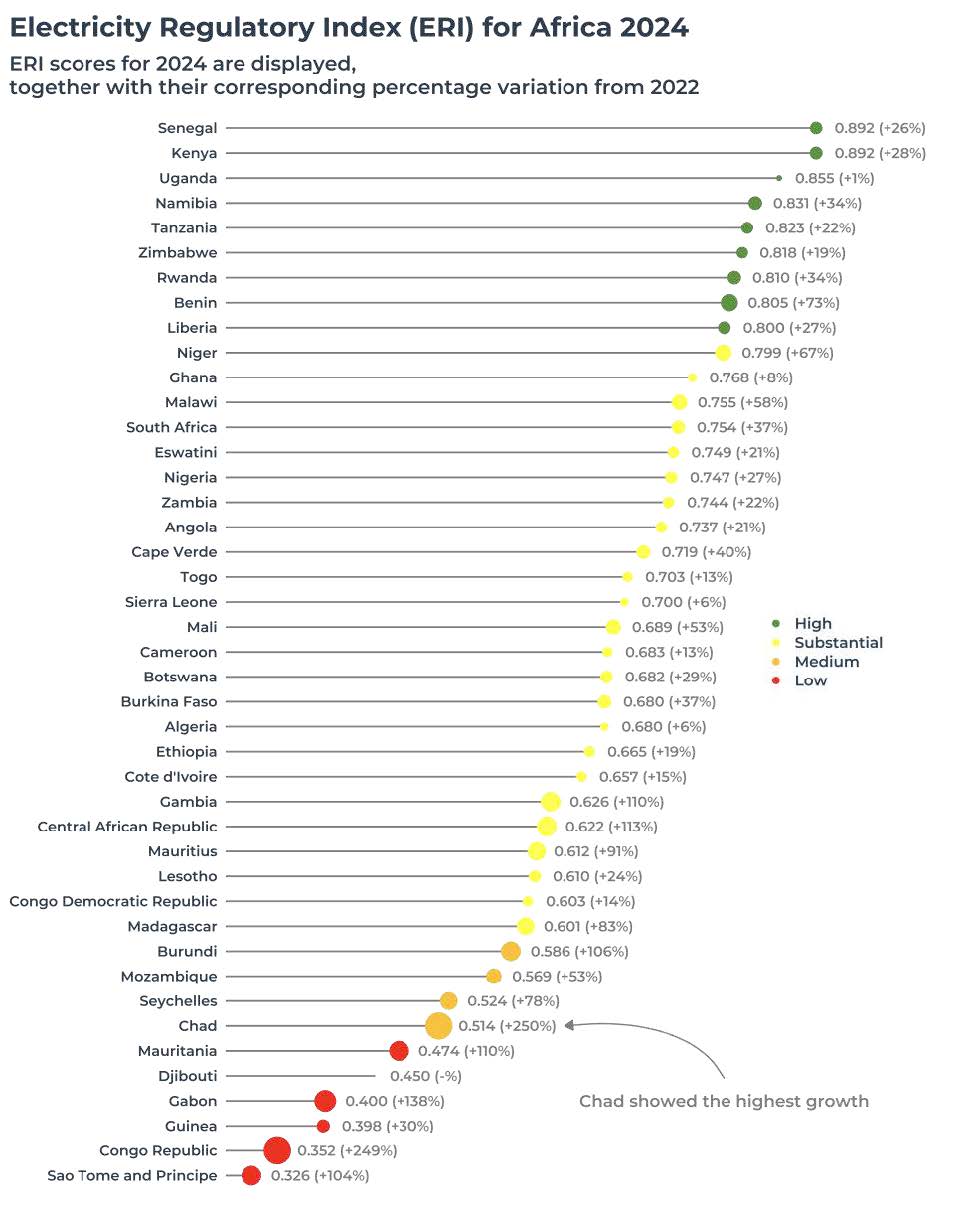
Why It Matters for Mission 300
Stronger, data-driven regulation directly improves bankability, reduces risk premiums, and enables blended finance under Mission 300. Predictable tariffs, transparent rulebooks, and performance-linked oversight make electricity markets more investable. ERI also strengthens accountability—its country-by-country indicators help identify bottlenecks and direct capacity-building where it has the greatest impact.
Regional Integration and Inclusion
The 2024 assessment also extended to five regional regulatory institutions—ERERA, RERA, RAERESA, IRB-EAPP, and EREA—which are aligning tariff and licensing frameworks to enable cross-border trade under the African Single Electricity Market (AfSEM). Regional harmonization is vital for Mission 300: it will reduce costs, expand interconnections, and increase reliability at scale.
Another promising shift is the growing integration of digitalization, data transparency, and gender inclusion in regulation. Regulators such as Ghana’s PURC and Zambia’s ERB are digitizing consultations and performance dashboards, while more women are leading regulatory agencies—advancing ERI’s next frontier of inclusive governance.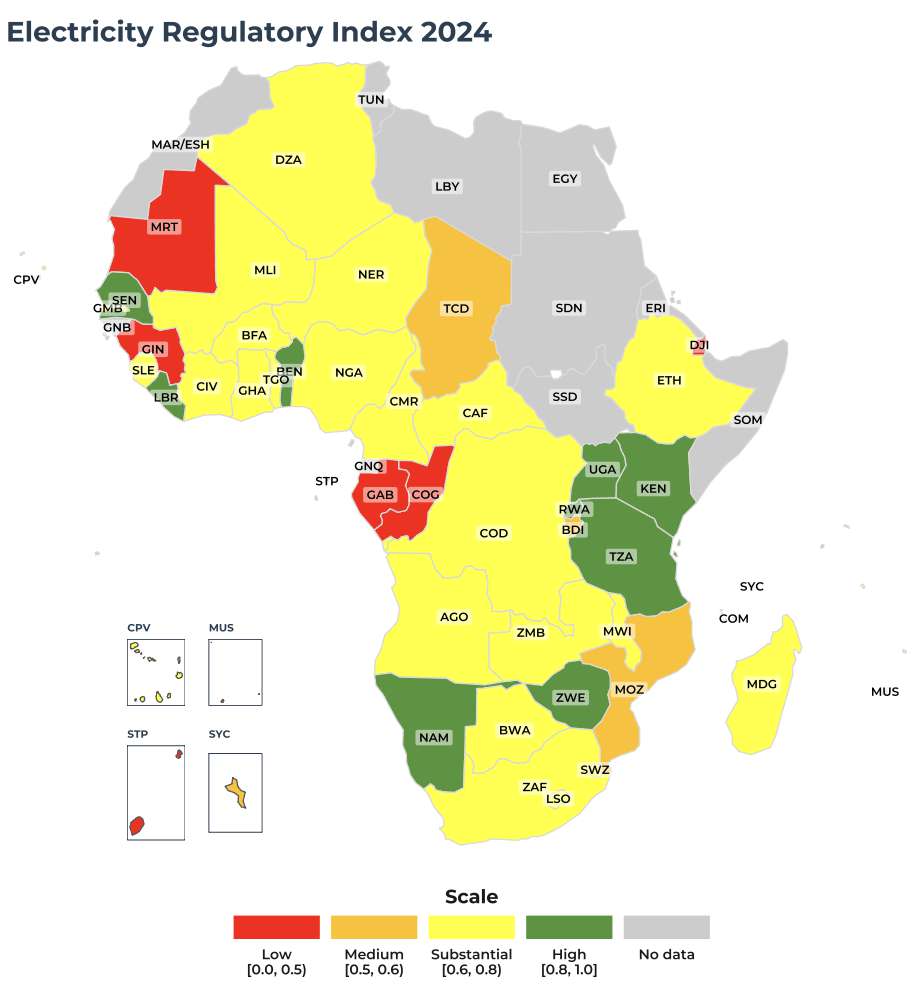
From Diagnosis to Delivery
Africa’s regulatory reform story is evolving from diagnosis to delivery. Each ERI cycle helps countries refine policies, align tariffs, and build resilience in climate-smart systems. Regulatory courage, data, and transparency are turning once-technical reforms into tangible progress for households, businesses, and entire economies.
If Mission 300 is the destination, ERI 2024 is the roadmap—guiding Africa’s journey from reform to results, and powering a people-first energy future built on credibility, inclusion, and sustainable growth.
Add New Comment